
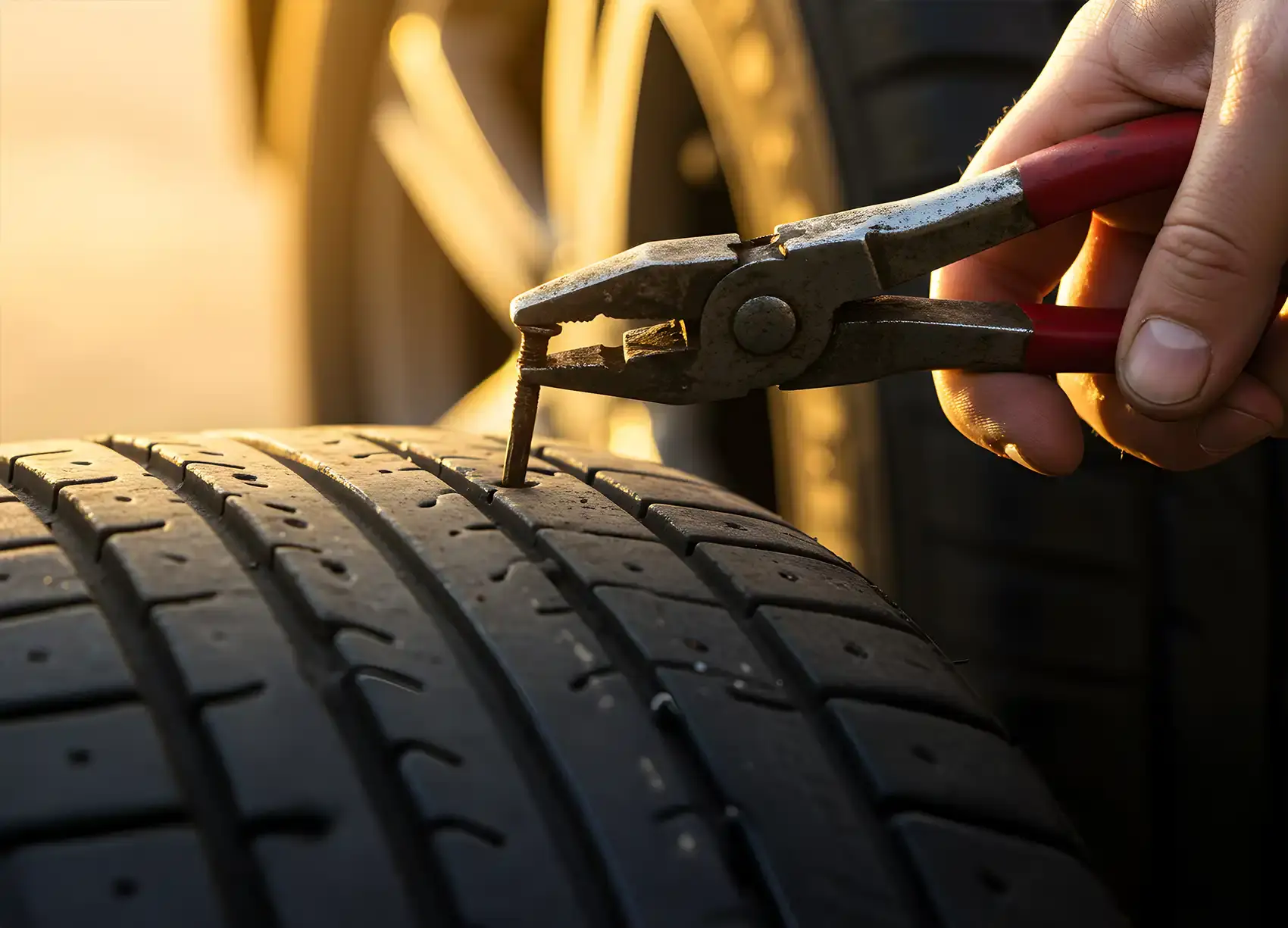
Finding a nail stuck in your tire can feel like a small disaster — especially when you’re in a rush. The big question drivers ask is: “Do I need a new tire if I have a nail in it?”
The good news? Not always. Depending on where the nail is located and how long it’s been there, you might be able to repair it safely. However, some situations require a full replacement. Let’s break down how to handle this common problem before it leads to bigger trouble.
Step 1: Assess the Situation
Before panicking, inspect the tire carefully. Many drivers immediately assume they’ll need to replace it, but a tire with a nail can sometimes be repaired.
Here’s what you should check:
- Location of the nail: If it’s in the tread area, you might be safe. If it’s near or on the sidewall, replacement is usually necessary.
- Depth of penetration: A shallow nail may not have punctured through completely.
- Air pressure: If the tire is losing air rapidly, don’t drive — call roadside assistance or change the tire immediately.
Knowing these factors helps answer, “Do I need a new tire if I have a nail in it?” more accurately.
Step 2: Determine If the Tire Can Be Repaired
So, can a tire with a nail be repaired? Yes — but only under certain conditions.
|
Condition |
Repairable? |
Explanation |
| Nail in tread area | Yes | Safe for professional patch and plug repair |
| Nail near sidewall | No | Too close to edge — unsafe to patch |
| Nail angle (straight in) | Yes | Clean punctures seal well |
| Large hole or tear | No | Compromises tire structure |
| Multiple punctures close together | No | Weakens rubber integrity |
If you’re unsure, don’t pull the nail out yourself — air could escape faster. Instead, visit a repair shop so a technician can inspect and decide whether it’s repairable or if you’ll need a replacement.
Step 3: How Long Can You Drive with a Nail in Your Tire?
Many drivers wonder, “How long can you drive with a nail in your tire?”
Technically, you can drive a short distance, but it’s risky. The longer you wait, the higher your chances of a blowout or complete flat.
Here’s a quick guideline:
- If air pressure is holding steady: You can drive carefully to a nearby service center.
- If the tire is losing air: Don’t drive more than a few miles. Pull over safely and replace it with your spare.
- If you hear flapping or wobbling: Stop immediately — driving on a compromised tire can damage your wheel and suspension.
Tip: Check your tire pressure with a gauge. Even a small leak can lead to dangerous underinflation, affecting handling and braking.
Step 4: What Happens If You Ignore It
Ignoring a nail in your tire is never a good idea. Over time, even a small puncture can:
- Cause slow air leaks, leading to poor fuel efficiency.
- Weaken the tire’s internal structure, making it prone to blowouts.
- Create uneven tire wear, reducing lifespan.
- Damage your vehicle’s suspension and alignment from uneven driving balance.
So if you’re asking, “Do I need a new tire if I have a nail in it?”, remember that acting early often means repair instead of replacement.
Step 5: How Professionals Handle It
When you bring your car in, certified technicians use specialized tools to inspect and repair the tire. Here’s what the process usually looks like:
- Inspection: They locate the puncture and assess its size and position.
- Tire removal: The tire is taken off the rim for internal inspection (this is key — external plug-only fixes are unsafe).
- Patch and plug: If eligible, a patch-plug combo is inserted from the inside, sealing the hole completely.
- Testing: The tire is re-inflated and tested for leaks before being reinstalled.
This method ensures the repair is permanent and safe for continued driving.
When Replacement Is the Only Option
Sometimes, a tire with a nail can’t be repaired, especially if:
- The nail is in or near the sidewall.
- The hole is larger than ¼ inch.
- There’s internal damage or exposed cords.
- You’ve driven too long on a flat tire.
In these cases, replacement is the safest route. Driving on a structurally compromised tire can lead to dangerous blowouts — especially at high speeds.
Preventing Nail Damage in the Future
While accidents happen, a few preventive habits can minimize your chances of getting another nail in your tire:
- Avoid driving near construction zones or areas with debris.
- Regularly inspect your tires for embedded objects.
- Keep tires properly inflated — underinflated tires are more vulnerable to punctures.
- Invest in quality tires with thicker tread protection.
- Rotate tires and schedule routine inspections during oil changes.
Table: Repair vs. Replace — What’s Right for You?
|
Situation |
Recommended Action |
Reason |
| Nail in tread, small puncture | Repair | Safe and affordable solution |
| Nail in sidewall | Replace | Structural risk too high |
| Multiple punctures | Replace | Weakens tire stability |
| Air pressure holding steady | Repair or inspect | Quick professional fix |
| Ongoing leak after repair | Replace | Permanent seal may not hold |
This table helps simplify the “Do I need a new tire if I have a nail in it?” decision for everyday drivers.
When to Visit ER Autocare
If you’ve found a nail in your tire, don’t wait — ER Autocare’s expert technicians can quickly determine whether your tire can be repaired or needs replacing.
We’ll perform a complete inspection, ensure proper patch-plug repair if possible, and help you avoid costly damage in the future.
Conclusion
So, do you need a new tire if you have a nail in it? It depends — but quick action can save you time, money, and safety risks.
In many cases, a tire with a nail can be repaired, but only if inspected early and handled by professionals.
For safe, reliable service and peace of mind, visit ER Autocare — your trusted experts in tire repair and maintenance.
